加载中…
Space Station Bioprinting Experiment Advances Lab-Grown Tissues
Company successfully bioprints human liver and kidney tissues in space for the first time using microgravity.
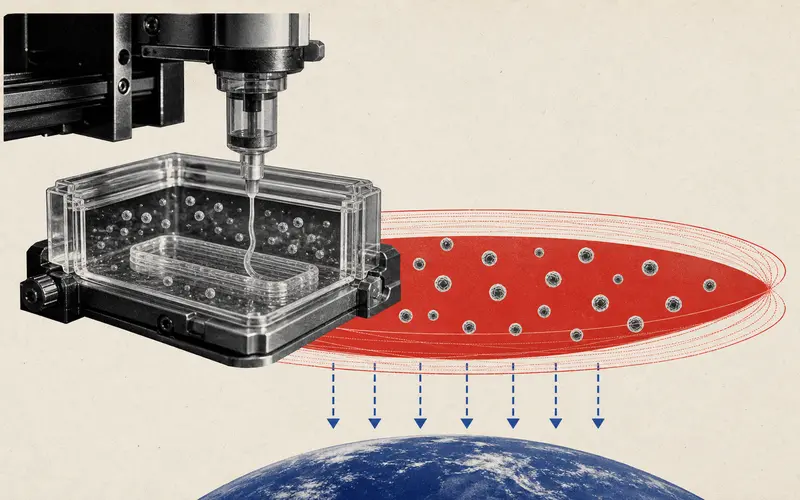
Auxilium Biotechnologies, a company based in San Diego, has successfully used its 3D bioprinter aboard the International Space Station to create structures containing human liver, kidney, and cartilage cells. This marks the first time liver and kidney tissues have been bioprinted in space.
The experiment addresses a key challenge in tissue engineering: controlling how different cells are distributed within a three-dimensional structure. On Earth, gravity causes particles and cells to sink or gather unevenly, which can prevent the tissue from functioning properly. The company believes microgravity allows cells and materials to remain more evenly distributed throughout the structure.
Auxilium sent its bioprinter to the space station in 2024, initially aiming to improve nerve-repair implants. The company remotely uploaded new printer instructions and monitored the work through station cameras. The printed structures returned to Earth about two weeks before this report for analysis. While these are not functioning organs yet, researchers hope to eventually create tissue patches that could help repair damaged organs like the liver.
划选单词可加入生词本 · Source: levelread.com