加载中…
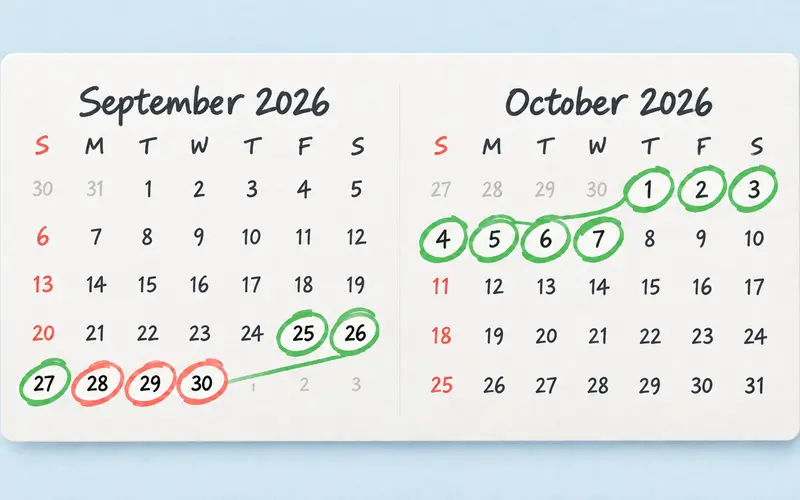
China’s 2026 Holiday Plan Enables 13-Day Break
Three leave days link two public holidays.
Imagine opening your calendar and discovering that Sunday is suddenly a workday, even though a longer holiday begins a few days later. For millions of people in China, this is part of tiaoxiu, a system that rearranges rest days around public holidays.
The 2026 calendar offers a striking example. The Mid-Autumn Festival holiday runs from September 25 to 27, while the National Day holiday runs from October 1 to 7. Only three normal workdays sit between them. A worker who uses annual leave on September 28, 29 and 30 can therefore enjoy 13 consecutive days away from work.
The system does not simply create extra holidays. Instead, it can redistribute rest days by turning some Saturdays or Sundays into official working days. In a vast country, many people live far from their hometowns, so a longer uninterrupted break makes family visits and long-distance travel easier. China has also increased its statutory public-holiday allowance in recent years.
However, the arrangement involves a trade-off. Longer breaks can support tourism and consumer spending because people spend more on transport, hotels, restaurants and attractions. At the same time, the system can concentrate travel demand into a narrow period, making trains, roads and tourist sites extremely crowded. The same long break that helps one traveler may make another person’s journey more difficult and exhausting.
划选单词可加入生词本 · Source: levelread.com